A very nutritious Valentine's Day
It's the season of love and also of sakura, cherry blossoms, here in Japan. What better time to talk about some naturally red and pink foods? Read on to discover ideas to incorporate these red and pink items this week to keep it festive. 💕 🌸 💗

6 pink or red foods to try this Valentine's Day week!
Cherry tomatoes
Cherry or grape tomatoes are a staple food in my house. Easy to snack on, add to salads, or roast for a delicious garnish, they're just so versatile and always hit the spot for me. And a plus for this Valentine's week is that they're red! I saw this really cute idea for making heart-shaped caprese skewers for the holiday, so that's one idea. If pressed for time, though, these small tomatoes are great by themselves or with mozzarella cheese. I ate some with a diced string cheese stick the other day. 😆
Tomatoes are good sources of vitamin C, potassium, folic acid, and the potent antioxidant pigment lycopene, which gives them their red color.1 Lycopene has anti-inflammatory properties and may protect against development of cardiovascular disease and some cancers.1-5 It may also help improve cholesterol levels and lower blood pressure, though the strength of evidence for this is lower, and the amount of tomatoes one would have to consume to see significant change is likely too high to be practical.1-5 But taken overall with other vegetables and elements of a healthy diet, tomatoes are a health-boosting choice.

Salmon
Salmon get their pink color from the pigment astaxanthin, which comes from the shrimp and krill or feed, if farmed, that the fish consume.6 This pigment has antioxidant and anti-inflammatory potential, but sadly isn't largely absorbed when we eat it (though wild-caught salmon and uncooked options like sushi make the pigment more bio-available).7 The main nutritional benefits of salmon are its high-quality protein, Vitamin D, and omega-3 fatty acids - healthy fats that support heart health and lower cholesterol and inflammation.6-8 Salmon can be polarizing, but it's a very versatile food - there are many ways to include it in your diet.
Some of my go-to ways to eat salmon are pictured below: smoked salmon on a bagel with cream cheese, salmon in sushi, or salmon in the air fryer topped with some salt, pepper, and dill.
Berries
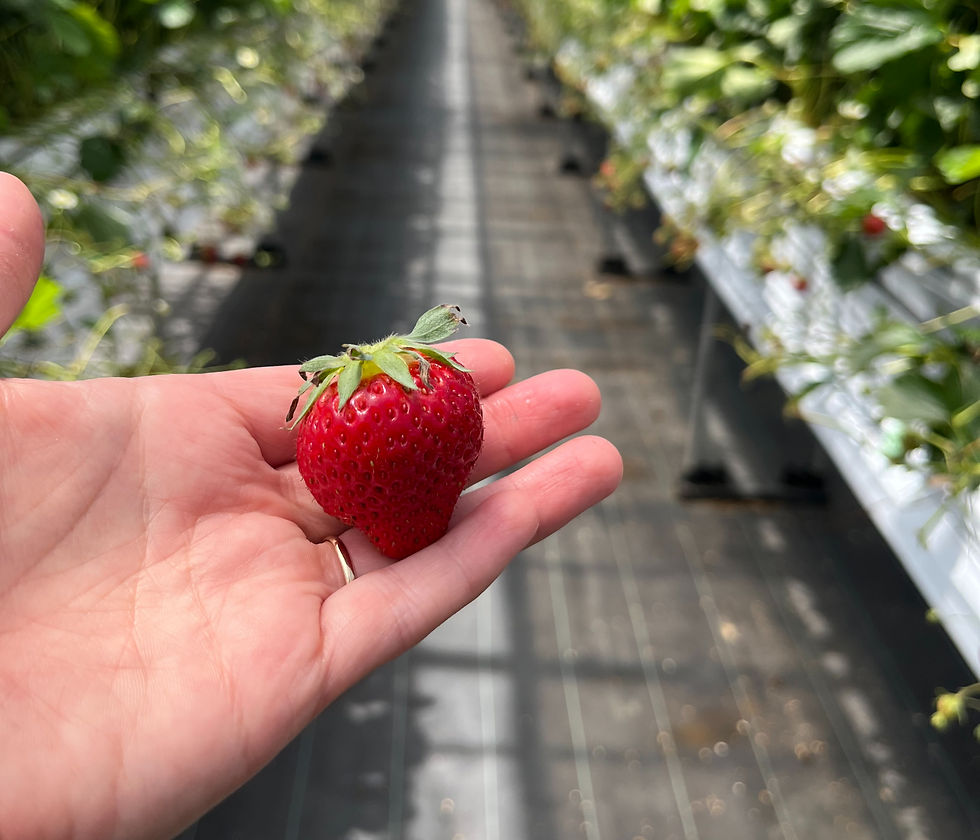
Strawberry season just happened here in Okinawa - strawberry-themed foods were everywhere! Berries are a great way to add some color into your day. This week, I'll focus on the red ones: strawberries and raspberries in particular. Berries are rich in fiber and can help mitigate blood sugar rise. Their red color comes from anthocyanin, a powerful antioxidant that could play a role in preventing cardiovascular and neurodegenerative diseases.9 Some ways to work them into your diet include: on the side at breakfast, frozen in a smoothie or smoothie bowl (and often this is the less-expensive option too!), with cream or whipped cream as dessert, or with yogurt. Fun fact: in college I crafted - at the dining hall - the French toast pictured below, and I thought it was so beautiful that I made it the background photo on my phone for weeks. 😂
Red cabbage
While I concede that "red" is a bit of a misnomer here - it's purple! - red cabbage still fits in the Valentine's Day theme because it still has a pink/red-adjacent color. 😀 Cabbage + sesame oil is a common offering here in Japan and in Korea, I've noticed. I decided to try it the other day with red cabbage, and the results were similarly refreshing and tasty. For extra Valentine's Day fun, I added a few sliced radishes into the mix for a pink-and-purple salad packed with nutrients. To the sesame oil, I added some chile flakes, a pinch of salt, a few drops of soy sauce, and a drop of hot honey. The purple color in the red cabbage is largely due to anthocyanins, those potent antioxidant pigments.9 The antioxidants + fiber in this beautiful vegetable give it high potential to regulate blood sugar and reduce risk for cardiovascular disease.9,10

Red peppers
Consider giving colorful bell peppers a try this week! I've always loved raw bell peppers as a crunchy snack, either on their own or as the vehicle for my dip of choice that day. Red bell peppers are the same species as green bell peppers, just more ripe - as the fruit ripens, the green chlorophyll breaks down and gives way to the red carotenoids that are present.11 Carotenoids have been shown to have antioxidant properties, and pepper species also contain some level of capsaicins (capsaicins are largely responsible for the spiciness of peppers), another antioxidant.11 Red peppers with ranch dressing pictured below.

Grapefruit
It's actually grapefruit season right now! A great time to enjoy this pink-red citrus fruit. Pink grapefruit's pink color comes from lycopene, which may improve vascular function and fight cardiovascular disease.3,5 The fruit is also high in antioxidant Vitamin C. I like to just cut grapefruit in half and eat the fruit with a spoon (easier with a grapefruit spoon) or have a glass of the sippable (slowly, because it's bitter) juice.

Don't forget to find your favorite less-nutrient-dense treats this week, too. I'm enjoying Hershey's Kisses and strawberry Pocky sticks. 😋 Happy Valentine's Day!
Thanks for reading! Have questions or comments? Email me here!
References
Li N, Wu X, Zhuang W, et al. [ABSTRACT ONLY] Tomato and lycopene and multiple health outcomes: Umbrella review. Food Chemistry. 2021;343:128396. doi:10.1016/j.foodchem.2020.128396
Cheng HM, Koutsidis G, Lodge JK, Ashor A, Siervo M, Lara J. Tomato and lycopene supplementation and cardiovascular risk factors: A systematic review and meta-analysis. Atherosclerosis. 2017;257:100-108. doi:10.1016/j.atherosclerosis.2017.01.009
Mozos I, Stoian D, Caraba A, Malainer C, Horbańczuk JO, Atanasov AG. Lycopene and Vascular Health. Front Pharmacol. 2018;9:521. doi:10.3389/fphar.2018.00521
Rattanavipanon W, Nithiphongwarakul C, Sirisuwansith P, et al. [ABSTRACT ONLY] Effect of tomato, lycopene and related products on blood pressure: A systematic review and network meta-analysis. Phytomedicine. 2021;88:153512. doi:10.1016/j.phymed.2021.153512
Bin-Jumah MN, Nadeem MS, Gilani SJ, et al. Lycopene: A Natural Arsenal in the War against Oxidative Stress and Cardiovascular Diseases. Antioxidants (Basel). 2022;11(2):232. doi:10.3390/antiox11020232
RDN LW MS. SMASH the Omega-3 Gap. Today’s Dietitian Magazine. June 1, 2025. Accessed February 10, 2026. https://www.todaysdietitian.com/smash-the-omega-3-gap/
Chitchumroonchokchai C, Failla ML. Bioaccessibility and intestinal cell uptake of astaxanthin from salmon and commercial supplements. Food Res Int. 2017;99(Pt 2):936-943. doi:10.1016/j.foodres.2016.10.010
Utri-Khodadady Z, Głąbska D, Guzek D. Effect of Consuming Salmon Products on Vitamin D Status of Young Caucasian Women in Autumn—A Randomized 8-Week Dietary VISA 2 (Vitamin D in Salmon Part 2) Intervention Study. Nutrients. 2024;16(20):3565. doi:10.3390/nu16203565
Mattioli R, Francioso A, Mosca L, Silva P. Anthocyanins: A Comprehensive Review of Their Chemical Properties and Health Effects on Cardiovascular and Neurodegenerative Diseases. Molecules. 2020;25(17):3809. doi:10.3390/molecules25173809
Cabbage (Brassica oleracea var. capitata): A food with functional properties aimed to type 2 diabetes prevention and management - Uuh‐Narvaez - 2021 - Journal of Food Science - Wiley Online Library. Accessed February 10, 2026. https://ift.onlinelibrary.wiley.com/doi/10.1111/1750-3841.15939
Younes AH, Mustafa YF. Sweet Bell Pepper: A Focus on Its Nutritional Qualities and Illness-Alleviated Properties. Indian J Clin Biochem. 2024;39(4):459-469. doi:10.1007/s12291-023-01165-w