My thoughts on meal plans - and some tips on making them
Meal planning: it's kind of a buzzword in the nutrition space. Meal planning is often looked to as a key tool for eating more healthfully, reducing food waste, and meeting nutrition goals (and research does support that structured meal plans can help with those things).
But it can also sometimes be challenging to find a good plan. Pre-programmed meal plans that are too restrictive or too aspirational can be hard to follow and even cause more food waste. And meal plans without a clear "how" or "why" can be difficult the other way - no clear instructions or reasons for why certain meals are in the plan, so it's hard to feel motivated to follow the plan. If you use a pre-made program or plan, you will get more variety but it may not feel personalized or achievable for you, resulting in a gap between the plan and what you can actually do. On the other hand, if you meal plan on your own, you'll get a plan that's personalized to your preferences and goals, but you may miss out on fun, fresh ideas and variety.

As a dietitian, I approach meal planning for clients with caution, and I almost never make full meal plans for clients. That is because I don't believe that just telling clients what and how much to eat is the best way for them to make changes toward their health goals. Instead, I prefer to work alongside clients to provide ideas and support nutrition planning and problem-solving that is ultimately client-led. Each of us is the expert of our own body and preferences, and we have the final say on what and how we eat, so it makes sense that the person who will be eating the food should be a central collaborator on the meal plan.
Self-led meal planning is a great tool for adding more variety into your diet and helping you stick to a goal of eating nutritiously. Instead of just downloading a one-size-fits-all program or plan from the internet and trying to follow it, I recommend dedicating some time to meal-planning on your own or with dietitian support.
Here are a few tips to help you plan your next meal or week of meals!
Aim for balance at most meals, but don't stress over having perfect macronutrient (carb/fat/protein) balance at every meal.
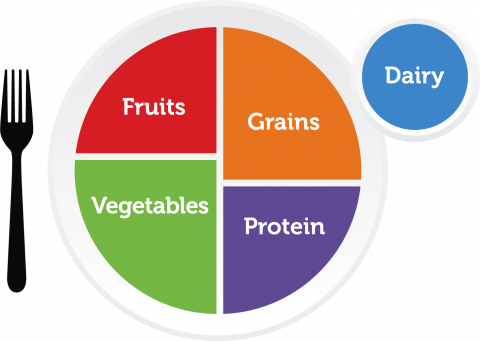
Balance, meaning including foods from different food groups that serve different purposes in the body, is important, and ideally our diets will contain a wide variety of different foods from all of the food groups. But some meals may look a little lopsided towards one food group or another, and that's okay. Strive for balance overall, but don't stress if one or two meals are "unbalanced." The plate model below shows what a healthy overall distribution of food groups might look like.
Make it fun!
Consider challenging yourself to try cooking new foods (butter tofu is on my list), searching for "copycat" recipes of your favorite restaurant dishes (more nutrition control if you make it at home!), adding 1 new fruit or vegetable to each day this week, or planning a themed dinner like Build-Your-Own Pizza Night. Approaching meal planning in a fun way can help you look forward to it rather than feel like it's just another task on the list. Speaking of fun with meals, my friend Ardis recently game-ified pasta in her new app, Pasta Challenge. The app gives seasonal, open-ended pasta ideas that inspire flavorful meals and, as Ardis puts it, "remind you that vegetables exist." 😂 Give it a try: Click here to grab one of my 3 codes for a FREE download of the app (otherwise it's 99 cents in the App store).

Use recipe-database websites to search by ingredient(s) that you like or that you have on hand
Even if you don't end up using that exact recipe, you may get some ideas on what to make. Some sites to check out:
ChatGPT or other AI tool (works well for this kind of thing, as much as I don't like it for other applications)

Leave some days or meals open while planning. This allows for flexibility and avoids waste if life happens and you're not able to follow the plan 100%. I like to plan about 4 days of dinners so that I have room to plug in a restaurant meal or a snack dinner / "girl dinner" depending on how my plans go during the week.

Invest in some handy food storage containers so that you can prep ingredients that are going to be used for multiple meals (e.g. green onions) once and store them prepared for later. You can also plan for eating dinner leftovers for lunch the next day, particularly with soups and curries - things that keep well overnight.

Take baby steps when trying new things or eating patterns. Don't make a plan that will overhaul your entire diet at once. Maybe plan 3 "new" dinners a week at first, and for the rest, stick to already-familiar recipes. You're more likely to meet your meal-planning goals this way!

Customized meal planning gets easier with practice. If you're interested in jumpstarting your planning with a meal plan made with support from a dietitian (yours truly 😊), check out my next event! I am offering Meal Planning Mini Sessions in place of a group event this month. These are one-on-one, 30-minute sessions designed to get some basic questions answered and then jump right in to building a meal plan (using my curated meal idea database) customized to your preferences. You will have your meal plan in your email inbox by the end of the day - along with some reminder notes on WHY the meal plan works for your specific nutrition goals. This meal plan could be your starting point in the direction of new ideas for meals, meal-planning, and healthier eating overall. Click below to sign up for a spot!

Thanks for reading. Have questions or comments? Email me here!